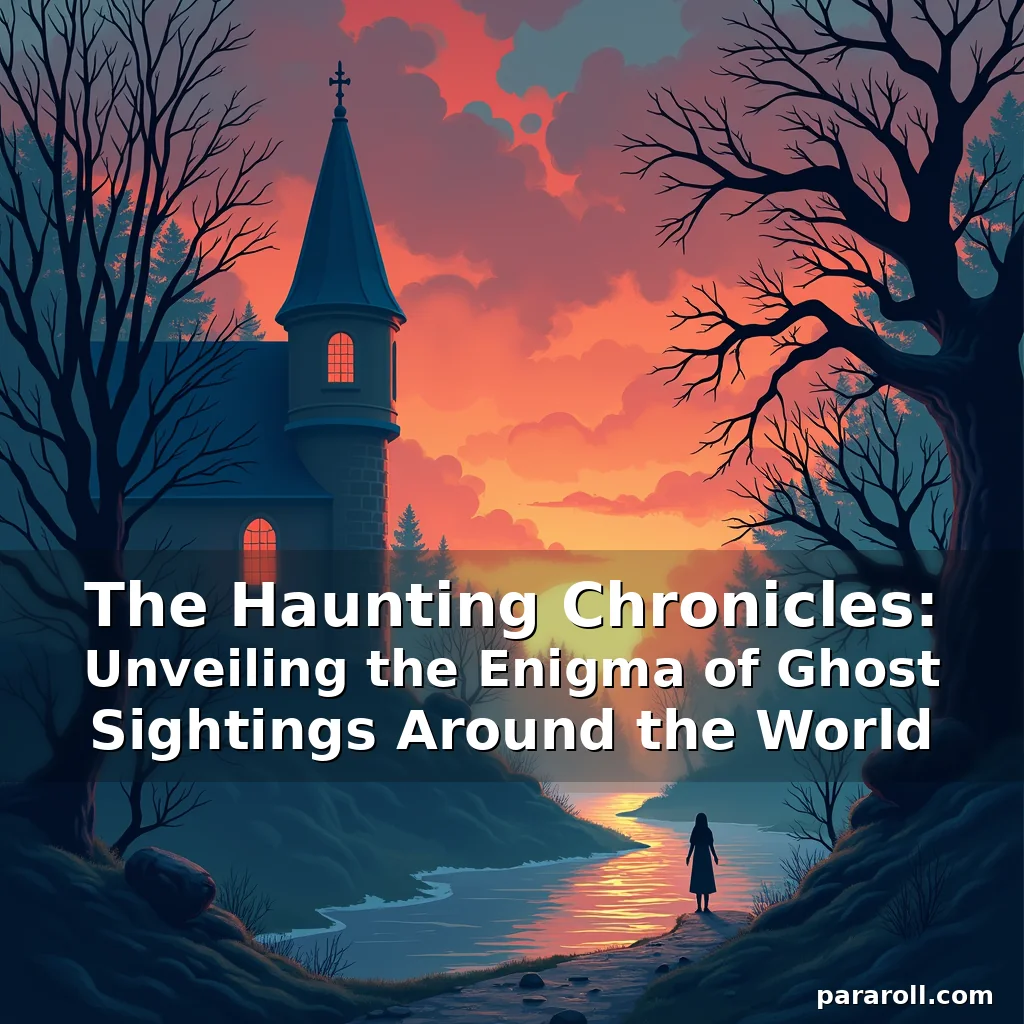
The Haunting Chronicles: Unveiling the Enigma of Ghost Sightings Around the World
Ghost sightings have captivated human imagination for centuries, weaving themselves into myths, folklore, and modern paranormal investigations. From ancient civilizations whispering tales of spirits to contemporary individuals capturing ghostly images on camera, these encounters continue to spark fascination and debate.
The phenomenon of ghost sightings spans cultures and eras, often reflecting societal beliefs and fears. Whether experienced as chilling apparitions or subtle disturbances, such events leave an indelible mark on those who witness them.
Historical Foundations of Ghost Sightings
Long before scientific inquiry provided rational explanations for many unexplained phenomena, early societies attributed strange occurrences to supernatural forces. These beliefs were deeply rooted in religious doctrines and oral traditions passed down through generations.
Civilizations such as the Egyptians, Greeks, and Romans incorporated ghosts into their mythologies, viewing them as either benevolent guides or vengeful entities. The concept of the afterlife played a significant role in shaping these perceptions.
Hindu and Buddhist traditions also feature complex notions of spirits and reincarnation, influencing how communities interacted with what they perceived as lingering souls.
During the Middle Ages, European Christians believed in purgatory and demons, which further shaped interpretations of ghostly experiences during that era.
- Egyptian belief systems: Pharaohs were thought to require spectral protection, leading to elaborate burial practices involving tomb paintings and protective amulets.
- Renaissance Europe: Reports of hauntings increased dramatically, coinciding with growing interest in alchemy, astrology, and esoteric knowledge.
Cultural Interpretations Across Continents
Cultures worldwide interpret ghost sightings differently based on historical context and spiritual frameworks. In Japan, for instance, yūrei are considered tragic spirits bound by unfinished business rather than malevolent beings.
In contrast, Latin American cultures often view specters as remnants of indigenous beliefs intertwined with Catholic teachings. This fusion has given rise to distinct regional legends about wandering souls seeking redemption.
African tribal traditions frequently involve ancestral spirits acting as protectors or messengers between worlds. Rituals honoring deceased relatives remain central to maintaining harmony within communities.
Middle Eastern societies incorporate djinn mythology alongside Islamic teachings, creating nuanced views on otherworldly presences that differ from Western interpretations.
Regional Variations Within Cultures
Brazil’s diverse population leads to varied approaches toward ghostly phenomena. Northern regions may emphasize Catholic influences while southern areas reflect Afro-Brazilian syncretism evident in candomblé rituals.
India presents another fascinating case study where Hindu, Muslim, Sikh, and Christian populations coexist but maintain distinct attitudes towards apparitions. This diversity results in rich storytelling traditions featuring both benevolent and dangerous ghosts.
Southeast Asian countries demonstrate similar complexity due to overlapping Buddhist, Taoist, and animistic elements that influence local ghost narratives.
Modern Experiences and Technological Advancements
With digital cameras, smartphones, and advanced recording devices now commonplace, documenting ghost sightings has become easier than ever before. Technology allows investigators to capture evidence that might otherwise go unnoticed.
Videos showing orbs, shadows moving independently of any known object, or apparent figures flickering briefly on screens have fueled ongoing debates about whether these are genuine paranormal activity or simply optical illusions caused by environmental factors.
Prominent paranormal researchers use infrared sensors and electromagnetic field meters when conducting investigations at reputed haunted locations around the world.
Despite technological progress, skepticism remains high among scientists who argue that most so-called ghost sightings can be explained by natural causes rather than actual supernatural entities.
- Orb phenomenon: Often mistaken for ghostly manifestations, these spherical lights typically result from moisture particles suspended in air being illuminated by flash photography.
- Digital artifacts: Electronic equipment sometimes creates false positives when subjected to extreme conditions such as low light levels or interference from nearby power sources.
Scientific Perspectives and Psychological Factors
Psychologists suggest that ghost sightings could stem from various cognitive processes including pareidolia—the tendency to perceive meaningful patterns in random stimuli—and sleep paralysis, which can produce hallucinations resembling supernatural entities.
Environmental psychologists note that certain atmospheric conditions create sensations commonly associated with hauntings. For example, infrasound frequencies below human hearing range have been linked to feelings of unease or fear.
Neuroscientists propose alternative explanations for reported ghost encounters, pointing out how brain chemistry changes under stress can alter perception significantly. Adrenaline rushes triggered by sudden noises or unexpected movements might lead people to misinterpret normal situations as paranormal.
There is also strong correlation between personal trauma history and likelihood of experiencing ghost-like visions later in life; unresolved emotional issues appear to play a crucial role here.
- Pareidolia examples: Seeing faces in clouds or recognizing familiar shapes amidst chaotic visual input illustrates our innate pattern recognition abilities gone awry.
- Emotional triggers: People going through grief stages often report heightened sensitivity to ambient energies supposedly emanating from recently departed loved ones.
Notable Cases and Historical Accounts
Famous ghost stories span continents and epochs, offering insight into collective anxieties surrounding death and the unknown. One enduring tale involves the Lady of the Lake haunting Scotland’s Loch Ness—an enigmatic figure said to warn fishermen away from treacherous waters.
In North America, the legend of the Headless Horseman originating from Washington Irving’s “The Legend of Sleepy Hollow” continues to inspire Halloween traditions despite lacking verifiable historical basis.
Japan boasts numerous well-documented cases like Aokigahara Forest’s reputation as a site frequented by suicide victims whose spirits allegedly linger there permanently.
Europe hosts its own share of famous hauntings—such as Hampton Court Palace in England rumored to be visited regularly by Anne Boleyn’s ghost seeking justice for her execution.
Controversial Claims and Debates
Some alleged ghost sightings attract considerable controversy over authenticity. The Amityville Horror case sparked intense public discussion regarding mental health treatment versus paranormal investigation efforts following reports of disturbing experiences inside a newly purchased home.
The Scole Experiment conducted in the late twentieth century aimed scientifically validate spirit communication but faced widespread criticism from mainstream academia questioning methodology used during research sessions.
Many skeptics dismiss claims made by mediums operating under dubious ethical standards, arguing that some exploit vulnerable individuals seeking comfort through supposed psychic connections.
This tension highlights broader philosophical questions about reality itself—if consciousness persists beyond physical death then entire worldview perspectives must shift accordingly.
Investigation Techniques and Equipment Used Today
Paranormal investigators employ specialized tools designed specifically for detecting anomalies suggesting possible non-human presence. Thermal imaging cameras help identify temperature fluctuations indicative of energy shifts occurring without clear environmental cause.
Doppler radar units track movement patterns across monitored spaces, distinguishing between organic motion and potential ghostly activity that defies conventional physics laws governing matter interaction.
Audio recorders equipped with frequency analyzers detect unusual sound waves outside typical auditory ranges, potentially revealing hidden messages encoded within background noise levels.
Data loggers collect continuous readings from EMF detectors placed strategically throughout investigated sites providing baseline measurements against which future incidents can be compared effectively.
- Thermal imaging applications: Sudden drops in localized temperatures correlate strongly with documented instances of cold spots frequently cited during ghost hunting expeditions.
- EMF detection challenges: While useful indicators, electromagnetic fields naturally occur everywhere making definitive proof difficult unless accompanied by additional corroborative data points.
Ethical Considerations in Ghost Hunting
As interest grows rapidly among enthusiasts eager explore mysteries behind ghost sightings responsibly pursuing truth requires adherence strict ethical guidelines ensuring respect towards all involved parties including living residents affected indirectly by intrusive methods applied.
Respecting privacy rights becomes paramount particularly concerning private property access agreements must always prioritize consent obtained legally before entering restricted zones.
Investigators should avoid causing unnecessary distress to those reporting unsettling experiences, acknowledging valid concerns rather than dismissing them outright without thorough examination first.
Transparency about limitations inherent within current investigative techniques helps manage expectations realistically preventing exploitation arising from promises guaranteeing conclusive answers unattainable yet.
- Consent protocols: Always secure written permission prior initiating surveys especially dealing sensitive topics requiring delicate handling procedures established beforehand.
- Distress management: Provide resources connecting individuals encountering troubling symptoms with qualified professionals capable addressing underlying psychological needs appropriately.
Conclusion
Ghost sightings represent a fascinating intersection of psychology, culture, science, and spirituality that continues evolving alongside humanity’s quest understand existence itself better.
Whether viewed purely as supernatural occurrences or interpreted through lenses provided by modern neuroscience remains open question inviting continued exploration both academically professionally personally.
“`