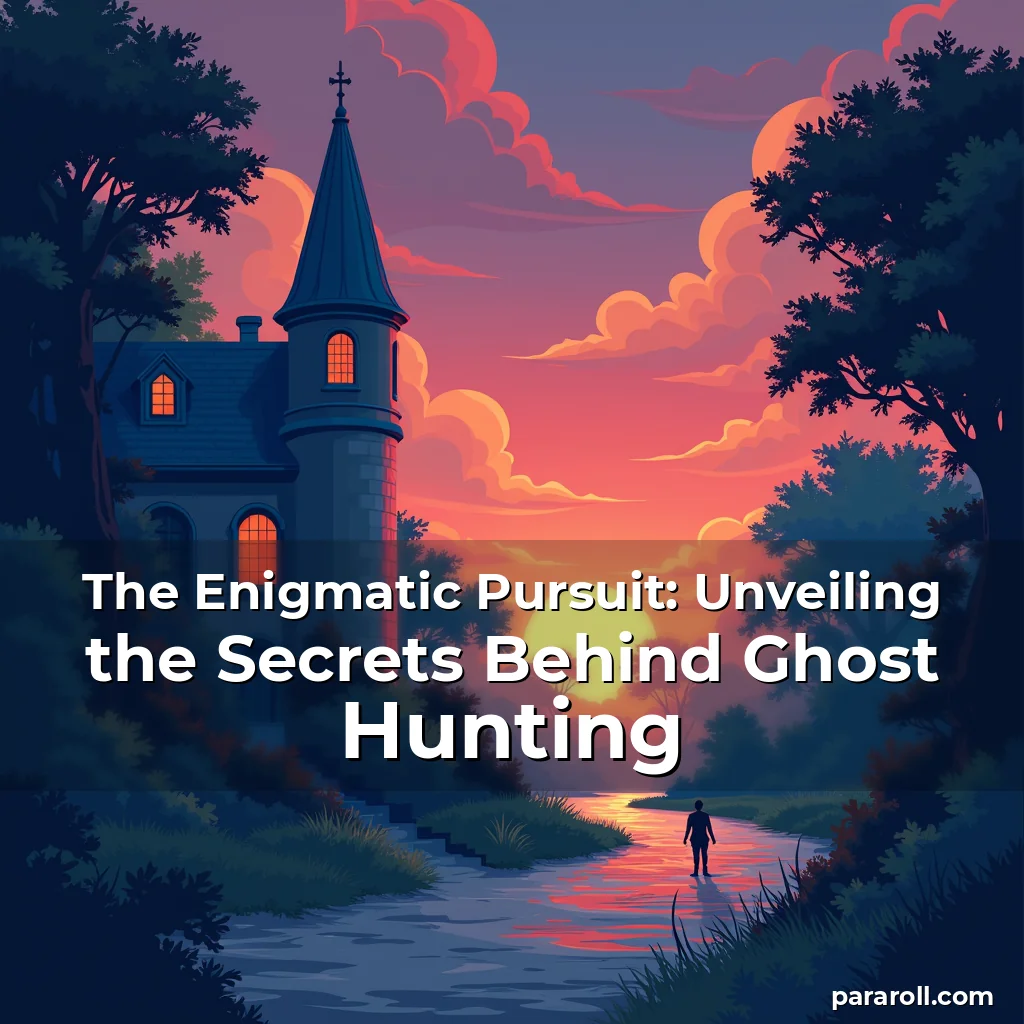
The Enigmatic Pursuit: Unveiling the Secrets Behind Ghost Hunting
Ghost hunting has long captivated the human imagination, transforming from mere folklore into an organized exploration that blends science with mystery. As the pararoll community continues to expand its horizons, enthusiasts are increasingly drawn to uncovering the paranormal through structured investigations.
This pursuit is not merely about chasing shadows; it’s a blend of history, technology, and personal experience aimed at understanding phenomena beyond our current scientific comprehension.
The Origins and Evolution of Ghost Hunting
Ghost hunting traces its roots back to ancient civilizations where stories of spirits were woven into cultural narratives. These tales served as cautionary lessons or explanations for unexplainable events in daily life.
As societies advanced, so did their methods of investigating these supernatural occurrences. The Victorian era saw a surge in interest, with séances becoming popular social gatherings aimed at contacting the deceased.
- Cultural Influence: Myths and legends have shaped how different cultures perceive ghosts, influencing modern ghost-hunting practices.
- Technological Advancements: From EMF meters to digital recorders, advancements in technology have revolutionized the way we approach ghostly encounters.
Modern Techniques in Ghost Hunting
Today’s ghost hunters employ various tools designed to detect anomalies associated with paranormal activity. These devices range from simple audio equipment to sophisticated thermal imaging cameras capable of capturing subtle temperature changes.
Investigations often involve meticulous preparation, including researching local histories and identifying potential hotspots known for reported hauntings. This groundwork can significantly enhance the chances of encountering something unusual during fieldwork.
A key aspect of any successful investigation involves creating an environment conducive to capturing evidence. Setting up sensors around suspected areas helps ensure comprehensive coverage without missing crucial data points.
Evidence Collection Methods
Collecting tangible proof remains one of the most challenging aspects of ghost hunting. While anecdotal accounts abound, physical evidence such as photographs showing orbs or electronic voice phenomenon (EVP) recordings provides some level of credibility.
In recent years, there has been growing emphasis on using high-resolution cameras equipped with night vision capabilities to capture clearer images under low-light conditions typical in haunted sites.
Audio analysis software now allows investigators to filter out ambient noise, making it easier to identify EVPs that might otherwise be overlooked by the human ear alone.
Statistical Insights Into Paranormal Evidence
Studies conducted over several decades indicate that approximately 68% of recorded EVP cases occur within environments previously occupied by individuals who died under traumatic circumstances.
Furthermore, statistical models suggest that locations with historical significance tend to yield higher rates of paranormal activity compared to other types of properties.
These findings underscore the importance of thorough research before initiating any formal investigation, ensuring that efforts align closely with what might actually produce meaningful results.
Psychological Factors Influencing Ghost Experiences
The psychological makeup of both participants and witnesses plays a significant role in shaping perceptions related to ghost sightings. Personal beliefs, fears, and expectations can dramatically influence how people interpret ambiguous stimuli encountered during investigations.
Research indicates that individuals experiencing heightened anxiety levels may be more prone to misinterpreting normal environmental sounds as voices coming from another realm. Understanding these dynamics can help prevent false positives during field operations.
Maintaining objectivity while remaining open-minded presents a delicate balance required for effective ghost hunting. Recognizing personal biases enables researchers to differentiate between genuine experiences and those influenced solely by suggestion or expectation.
Community Engagement and Collaboration
Ghost hunting thrives on collaboration among members of the pararoll community and broader enthusiast groups worldwide. Sharing knowledge, resources, and experiences fosters collective growth within this niche yet passionate sector.
Online forums serve as vital platforms for exchanging information regarding new technologies, emerging trends, and best practices adopted across different regions. Engaging actively with others enhances learning opportunities available locally and globally alike.
Participation in group excursions offers invaluable hands-on training sessions led by experienced professionals willing to mentor newcomers eager to explore this fascinating field further.
Risks and Ethical Considerations
Pursuing paranormal activities carries inherent risks that must be acknowledged upfront. Physical dangers include navigating unfamiliar terrain, exposure to extreme weather conditions, or encountering hazardous structures left abandoned due to previous incidents.
Ethically sound practice requires respecting property rights whenever conducting investigations outside private residences unless explicit permission has been granted beforehand. Disregarding legal boundaries could lead to serious consequences affecting future accessibilities.
It’s also essential to consider emotional impacts upon residents living near frequently visited spots. Ensuring sensitivity towards them maintains goodwill necessary for continued support from local communities involved indirectly but still affected positively by ongoing studies.
The Future of Ghost Hunting Technology
Ongoing developments in artificial intelligence promise transformative changes impacting how we analyze collected data sets efficiently. Machine learning algorithms trained specifically for detecting patterns indicative of non-random occurrences offer exciting possibilities ahead.
Integration of augmented reality systems may soon allow virtual reconstructions overlaying historical context onto real-world settings enhancing educational value derived from each visit substantially.
Advancements continue pushing forward towards greater accuracy when interpreting complex datasets gathered remotely via satellite imagery or drone-assisted surveys covering vast geographical expanses quickly without direct human intervention needed traditionally.
Conclusion
Ghost hunting stands uniquely positioned at the intersection of belief systems, empirical inquiry, and technological innovation. Its appeal lies precisely in this duality—offering thrilling adventures alongside intellectual challenges worthy of deeper exploration.
To anyone considering entering this world, remember: respect for all parties involved combined with rigorous methodology forms the foundation upon which credible discoveries rest securely today and tomorrow alike.