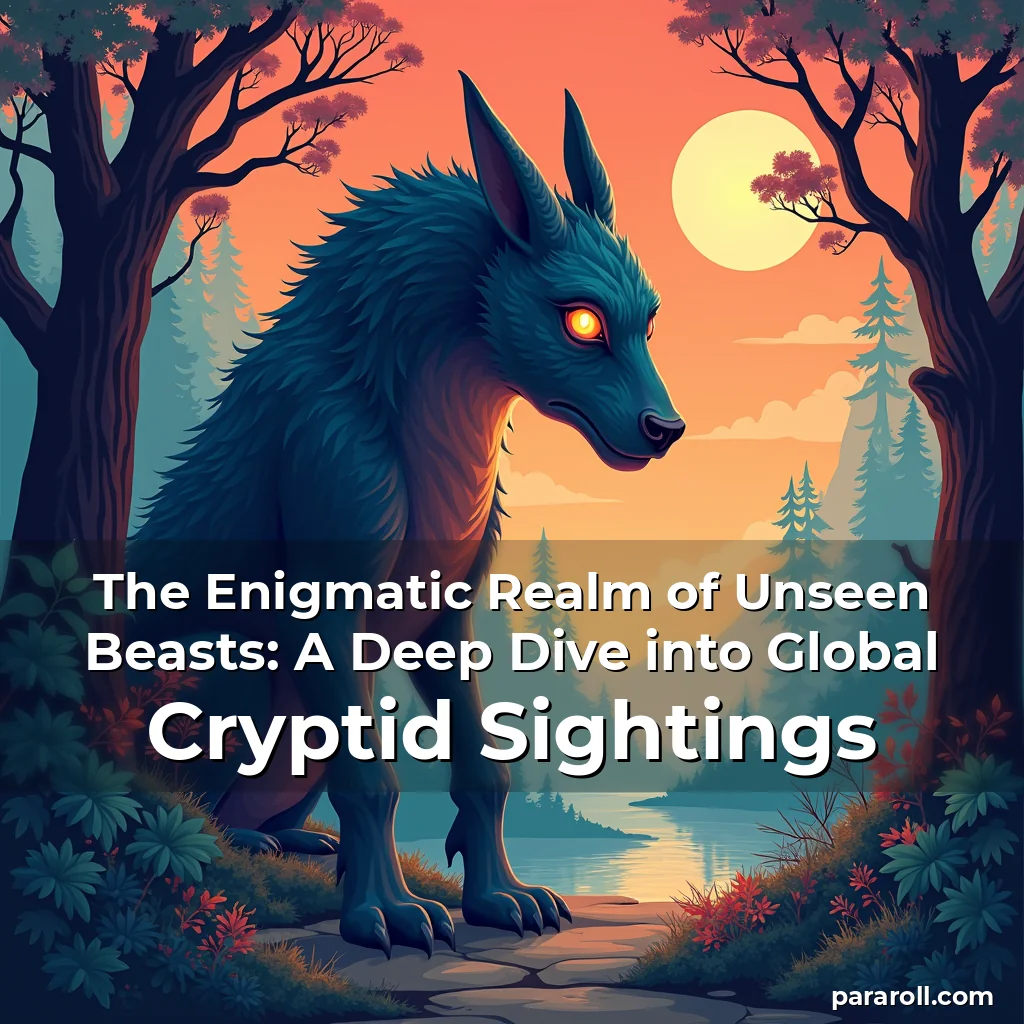
The Enigmatic Realm of Unseen Beasts: A Deep Dive into Global Cryptid Sightings
Cryptids—those elusive creatures that defy scientific classification—have captivated human imagination for centuries. From shadowy figures lurking in dense forests to spectral beings haunting remote coastlines, these enigmatic entities continue to fuel curiosity and debate among researchers, enthusiasts, and skeptics alike.
In recent years, cryptid sightings have gained unprecedented attention due to advances in technology, increased media coverage, and growing online communities dedicated to paranormal investigations. The intersection of folklore, science, and modern exploration has created an environment where every reported encounter becomes both a mystery and a potential breakthrough.
The Origins and Evolution of Cryptid Lore
Cryptids are not merely figments of contemporary fancy; their roots stretch deep into ancient mythologies across cultures worldwide. Indigenous tribes from Africa’s rainforests to North America’s vast wildernesses have long spoken of mysterious beasts guarding sacred lands or punishing those who trespass.
Many early civilizations wove cryptids into their cosmology as divine messengers or omens of doom. Ancient Greek texts describe sea monsters that once terrorized coastal settlements, while Norse sagas recount encounters with monstrous wolves roaming through icy tundras. These stories were often passed down orally before being recorded in historical manuscripts.
The transition from oral tradition to written documentation marked a pivotal moment in cryptid history. As explorers ventured beyond familiar territories during the Age of Discovery, they documented strange creatures encountered in uncharted regions. These accounts laid the foundation for what would become modern cryptozoology.
During the late 19th century, zoologist Ivan Tikhomirov coined the term “cryptozoology” to study hidden animals whose existence was only hinted at by local legends or rare specimens. This formalization gave rise to structured research methods aimed at verifying claims rather than simply collecting tales.
Famous Cryptid Encounters Through History
Among the most famous cryptid sightings is the legend of the Loch Ness Monster, affectionately dubbed “Nessie.” First popularized after a series of alleged photographs surfaced in 1933, this Scottish lake monster remains one of the most enduring mysteries in cryptozoological circles.
While many dismiss these reports as hoaxes or misidentifications, others argue compelling evidence supports its existence. Sonar scans have detected anomalous movements beneath the waters, and numerous eyewitness accounts over decades suggest something larger than any known aquatic species resides there.
Beyond Scotland, other legendary cryptids include Bigfoot in North America, Yara-ma-yha-who in Australia, and the Chupacabra in Latin America. Each region boasts its own version of these mythical beings, reflecting cultural narratives shaped by geography and indigenous knowledge systems.
The Chupacabra phenomenon, which began in Puerto Rico in the mid-1990s, quickly spread across Central and South America. Described as a reptilian creature with spines along its back that drains livestock of blood, this entity sparked widespread fear and fascination within affected communities.
- Nessie: Believed to be a plesiosaur descendant, this freshwater serpent continues to baffle scientists despite extensive searches using sonar mapping techniques.
- Bigfoot/Sasquatch: Often described as towering apelike hominins covered in thick fur, credible sightings persist despite lack of physical proof such as bones or DNA samples.
- Chupacabra: Initially depicted as having glowing red eyes and sharp claws, later descriptions vary widely but consistently involve nocturnal predation behavior targeting farm animals.
Modern Technology and Its Impact on Cryptid Research
Advancements in digital imaging, satellite surveillance, and artificial intelligence have transformed how we approach cryptid investigation today. Drones equipped with thermal cameras can now scan remote areas previously inaccessible without risking human life.
Smartphone apps designed specifically for reporting unusual wildlife activity allow citizens to contribute real-time data to global databases maintained by cryptozoologists. This crowdsourced information helps identify patterns that might otherwise go unnoticed.
Artificial intelligence algorithms trained on thousands of hours of footage can analyze video clips faster than humans ever could, distinguishing between genuine anomalies and common mistakes like camera malfunctions or animal camouflage effects.
Satellite imagery has also played a crucial role in tracking suspected habitats suitable for large unknown mammals. By analyzing vegetation cover changes over time, researchers gain insight into possible migration routes taken by elusive primates or predators avoiding detection.
Scientific Skepticism vs. Open-Minded Inquiry
The scientific community remains divided on whether cryptids represent undiscovered species or mere fabrications born out of collective hallucination and wishful thinking. Rigorous peer-reviewed studies rarely support positive identification of any cryptid.
Paleontologists emphasize that new species are typically discovered through fossil records rather than anecdotal evidence alone. However, some biologists acknowledge gaps in our understanding of biodiversity, particularly regarding organisms living in extreme environments.
Despite skepticism, organizations like MUFON (Mutual UFO Network) maintain active interest groups focused exclusively on investigating unidentified flying objects alongside terrestrial cryptids. Their methodologies incorporate forensic analysis combined with traditional fieldwork approaches.
Critics warn against conflating urban legends with legitimate biological discoveries. They stress importance of maintaining strict evidentiary standards when evaluating claims made under conditions prone to misinformation or deliberate deception.
Notable Cryptozoologists and Their Contributions
Dr. John Kirk, founder of the International Society of Cryptozoology, pioneered systematic approaches toward studying cryptids based on empirical observation rather than relying solely on folklore traditions.
Kirk emphasized cross-referencing multiple sources including native testimonies, environmental factors influencing behavior patterns, and comparative anatomy theories suggesting evolutionary links to existing fauna.
Other influential figures include Bernard Heuvelmans, considered father of modern cryptozoology who authored seminal works exploring connections between myths and actual animals still awaiting discovery.
More recently, Dr. Karl Shuker has contributed significantly through his extensive cataloging efforts documenting hundreds of reported cases globally categorized by type, location, credibility level, etc.
Evidence Collection Techniques in Modern Times
Today’s investigators employ various tools ranging from high-resolution photography equipment capable of capturing ultra-detailed images even under low-light conditions. Thermal imaging devices help detect heat signatures indicative of warm-blooded creatures hiding nearby.
Gene sequencing technologies offer promising avenues for confirming identities should tissue samples ever be obtained legally and ethically. Forensic analysts work closely with law enforcement agencies whenever suspicious remains surface unexpectedly.
Acoustic monitoring stations placed strategically around forested regions record sounds associated with movement patterns characteristic of certain predator-prey dynamics observed elsewhere in nature.
DNA testing facilities process hair strands found near supposed sighting locations comparing them against known mammalian genomes available publicly via international genetic repositories.
The Role of Media and Popular Culture in Shaping Perceptions
Television shows, documentaries, podcasts, and social media platforms have dramatically influenced public perception of cryptids over past few decades. Sensational storytelling tactics employed by some outlets prioritize entertainment value above factual accuracy.
Reality TV programs featuring amateur hunters pursuing Bigfoot or similar creatures attract millions viewers eager witness dramatic confrontations though critics argue these formats distort reality by editing raw footage selectively for suspenseful effect.
Movies depicting giant prehistoric reptiles attacking cities create unrealistic expectations about what true cryptids might look like leading people astray when interpreting real-world phenomena incorrectly.
Conversely, educational initiatives promoting critical thinking skills enable audiences differentiate between fantasy elements presented purely for amusement versus authentic investigative journalism focusing on verifiable clues gathered systematically.
Community Involvement and Citizen Science Initiatives
Leveraging mobile technology enables everyday individuals participate actively in ongoing research projects related to cryptid investigations. Apps developed specifically encourage users report odd behaviors exhibited by local wildlife populations possibly indicating presence unfamiliar species.
Online forums serve dual purposes acting simultaneously as discussion boards where experienced trackers share tips while also functioning as archives preserving historical records invaluable future studies seeking correlations across different geographical zones.
Local chapters organized nationwide promote collaboration between residents possessing firsthand knowledge regional ecosystems working together professionals armed advanced analytical resources required validate extraordinary claims responsibly.
Volunteer networks assist experts collect preliminary data covering wide expanses landmasses ensuring nothing overlooked potentially significant finding gets missed due limited manpower constraints faced academic institutions conducting independent field surveys.
Environmental Factors Influencing Cryptid Activity
Habitat preservation efforts indirectly benefit cryptozoological pursuits by maintaining ecological balance essential sustaining diverse lifeforms including those yet unnamed scientifically. Deforestation threatens not only well-known endangered species but may displace secretive inhabitants preferring isolation.
Climate change alters migratory paths taken annually by birds fish affecting availability food sources thereby impacting survival rates among apex predators whose hunting strategies rely predictable prey distributions throughout seasons.
Urban sprawl encroaching upon natural reserves forces wild animals adapt unconventional means securing sustenance increasing likelihood encountering humans circumstances conducive mistaken identifications occurring frequently nowadays.
Conservationists advocate sustainable development practices prioritizing coexistence between expanding human population requirements meeting needs wildlife thriving undisturbed contributing positively towards uncovering truths surrounding persistent questions about mysterious beings dwelling Earth’s most secluded corners.
Psychological Perspectives on Witness Reliability
Investigators must consider psychological aspects involved eyewitness testimony reliability especially concerning traumatic experiences involving perceived threats posed unseen creatures. Stress-induced memory distortion affects recollection details accurately recalling events post hoc.
Studies show heightened emotional arousal impairs cognitive processing resulting fragmented narratives difficult reconciling logically coherent sequence chronological order subsequently examined critically during evaluation procedures carried independently third parties possessing objective viewpoint.
Confirmation bias plays prominent role shaping perceptions witnesses interpret ambiguous stimuli consistent preconceived notions held regarding particular entities believed existent within specific geographic regions according to prevailing local lore.
To mitigate subjectivity, researchers implement standardized protocols requiring corroborative evidence supporting isolated incidents ensuring conclusions drawn remain grounded empirical findings rather speculation fueled imaginations.
Cultural Significance and Symbolic Meanings Attached to Cryptids
Throughout history, cryptids have served symbolic roles representing fears anxieties facing societies confronting existential uncertainties brought forth technological progress globalization pressures reshaping traditional ways life.
In many indigenous cultures, belief systems incorporate spiritual dimensions attributing supernatural powers attributed these entities serving protective functions deterring outsiders entering sacred spaces violating taboos established generations ago.
Myths evolve adapting contemporary contexts reflecting changing societal values priorities demonstrated through reinterpretations ancient stories told newly emerging generations grappling identity issues amidst rapid cultural shifts occurring globally today.
This dynamic interplay between mythology present realities underscores importance preserving cultural heritage respecting beliefs hold significance communities regardless validity scientifically examining claims subjected rigorous scrutiny.
Future Directions for Cryptid Studies
As interdisciplinary collaborations expand integrating fields biology anthropology computer science methodologies applied previously disparate domains converge enhancing overall comprehension complex interactions occurring between manmade environments natural world.
Emerging disciplines like bioinformatics provide novel frameworks analyzing genomic sequences collected samples obtained ethical manner facilitating comparisons similarities differences existing taxonomic classifications revealing potential candidates warrant further examination.
Remote sensing capabilities coupled machine learning models predict optimal search zones likely harboring undiscovered organisms leveraging predictive analytics identifying patterns undetectable human observers operating conventional survey techniques constrained temporal limitations logistical challenges inherent fieldwork endeavors.
Public engagement campaigns raise awareness benefits conserving ecosystems recognizing intrinsic value preserving biodiversity fosters greater appreciation understanding relationship between humanity broader biosphere ultimately advancing quest discover truth behind age-old riddles mankind has pondered since earliest days civilization.
Conclusion
Cryptid sightings occupy fascinating niche where science fiction meets serious inquiry prompting continual reassessment boundaries defining knowledge unknown. While definitive answers elude us, pursuit itself enriches intellectual landscape encouraging open-mindedness embracing uncertainty as catalyst innovation exploration.
Whether viewed through lens skepticism or wonderment, encounters with cryptids remind us humility size universe remaining much to learn about planet calling home. Engaging respectfully with these mysteries honors legacy seekers past inspires future generations embark journeys discovery truth hidden shadows world.