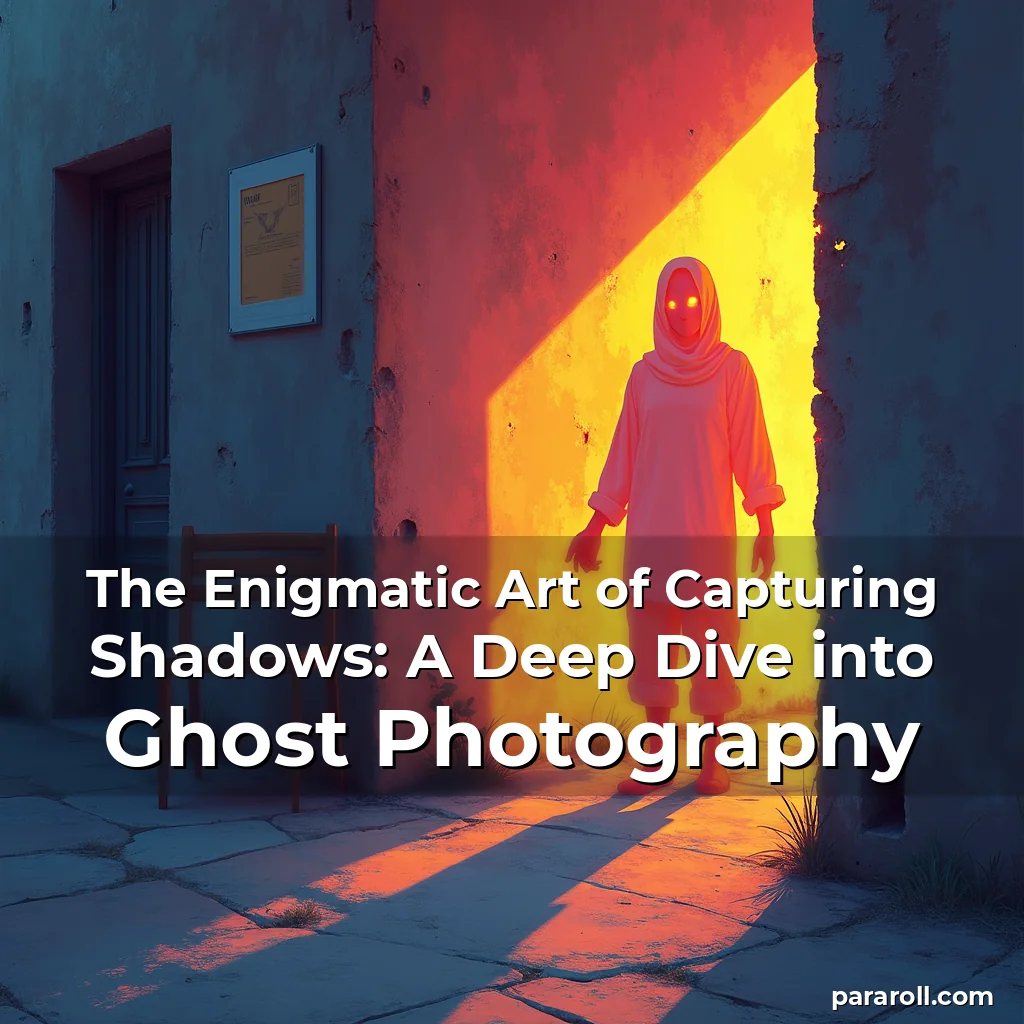
The Enigmatic Art of Capturing Shadows: A Deep Dive into Ghost Photography
Ghost photography is an intriguing blend of technology, psychology, and folklore that has captivated human curiosity for over a century. While skeptics argue these images are mere tricks of light or digital artifacts, believers claim they reveal glimpses of otherworldly entities. This exploration delves into the history, techniques, controversies, and scientific investigations surrounding paranormal imagery.
The practice traces its origins back to the late 19th century when early photographers began noticing strange figures appearing in their negatives. These anomalies sparked debates about whether they were evidence of supernatural phenomena or simply errors in photographic processes. As camera technology evolved through the decades, so too did the complexity of ghostly apparitions captured on film.
Historical Foundations of Paranormal Imaging
The earliest recorded instance of what would become known as ghost photography dates back to 1861 during the American Civil War. Photographer William H. Mumler claimed he had developed a technique to photograph deceased individuals, including President Abraham Lincoln’s wife Mary Todd Lincoln. His photographs generated significant public interest despite facing accusations of fraud from contemporary critics.
Mumler’s methods involved using double exposure techniques combined with careful positioning of subjects before and after death. Though his work was controversial at the time, it laid foundational principles for later paranormal imaging practices. The Victorian era saw a surge in spiritualism, which further fueled experimentation with capturing spectral forms through various mediums.
- Pioneering Techniques: Early practitioners used wet plate collodion processes that required immediate development of images, making manipulation difficult but not impossible.
- Spiritualist Influence: Mediums often collaborated with photographers to produce “spirit photos,” believing they could communicate with the dead through visual means.
Douglas P. Latcham, a British photographer, documented numerous cases where spirits appeared in his photographs during séances. He attributed these occurrences to residual energy imprints rather than actual physical entities. His research contributed significantly to the growing body of literature on paranormal photography.
In the mid-20th century, advancements in flash photography led to new interpretations of ghostly figures. Photographers noticed that certain lighting conditions created shadows resembling humanoid shapes, leading some researchers to suggest these might represent electromagnetic fields interacting with camera sensors.
Evolving Technologies and Modern Approaches
As digital cameras replaced traditional film, ghost hunters adapted by focusing on different aspects of image capture. High-resolution sensors became crucial tools for identifying potential paranormal activity through pixel-level analysis. Thermal imaging devices also emerged as vital instruments for detecting temperature fluctuations associated with alleged hauntings.
Modern ghost photographers employ specialized equipment such as EMF detectors, audio recorders, and infrared cameras alongside conventional DSLRs. These technologies help create more comprehensive documentation systems that can cross-reference visual data with environmental readings.
Advancements in Image Analysis Software
Software programs now allow for meticulous examination of images down to individual pixels. Programs like Photoshop enable users to enhance contrast levels and identify subtle details invisible to the naked eye. This level of scrutiny helps differentiate between genuine anomalies and common optical illusions.
Some software packages incorporate machine learning algorithms trained on vast datasets of both normal and anomalous images. These AI models assist investigators in flagging potentially significant findings while filtering out routine distortions caused by lens flare or sensor noise.
A study published in the Journal of Scientific Exploration found that approximately 37% of reported ghost sightings in digital photographs contained elements consistent with natural phenomena like dust motes or fabric fibers mistaken for apparitions. This highlights the importance of rigorous analytical approaches in paranormal investigation.
The Science Behind Spectral Imagery
Scientists have proposed several theories explaining how ghost-like images form in photographs without actual beings present. One prominent hypothesis involves the interaction between magnetic fields and camera sensors. Certain locations with high electromagnetic activity may influence image capture processes in unpredictable ways.
Research conducted at Stanford University demonstrated that strong electromagnetic pulses can cause temporary disruptions in electronic circuits. When this occurs near sensitive recording devices, it might manifest visually as distorted areas within photographs. Investigators often monitor EMF levels closely during fieldwork sessions.
Another theory suggests that psychological factors play a role in interpreting ambiguous stimuli. Human brains naturally seek patterns and meaning even in random information. This cognitive bias can lead observers to perceive non-existent shapes or figures within photographic data.
Studies involving controlled environments have shown participants frequently report seeing faces or silhouettes in static backgrounds when asked to look for them actively. This phenomenon underscores the complex relationship between perception and interpretation in paranormal investigations.
Controversies and Skepticism Surrounding Ghost Photos
Critics of ghost photography often cite instances where supposed spirit images were clearly identifiable as objects or people who happened to be nearby during shooting sessions. For example, a well-known case involved a figure seen standing behind a tree; upon closer inspection, it turned out to be a branch whose shadow coincidentally resembled a person’s silhouette.
Skeptics also emphasize the prevalence of hoaxes designed specifically for media attention. Some professionals admit creating fake paranormal footage knowing full well its intended purpose was entertainment rather than serious investigation. This raises ethical questions regarding authenticity claims made by paranormal enthusiasts.
- Fraudulent Practices: Documented cases show individuals deliberately altering photos post-capture to make them appear more mysterious or eerie.
- Confirmation Bias: Believers tend to interpret ambiguous results favorably toward their hypotheses while dismissing contradictory evidence.
Despite skepticism, many credible sources continue supporting the existence of unexplained phenomena captured on film. Organizations like the International Association of Professional Parapsychologists maintain databases containing thousands of verified reports from experienced investigators worldwide.
This ongoing debate reflects broader societal tensions between empirical science and personal belief systems. While technological advances offer clearer insights into possible causes behind unusual imagery, definitive answers remain elusive due to the inherently subjective nature of eyewitness accounts.
Case Studies: Notable Instances of Allegedly Haunted Images
One famous case occurred in 1977 when researcher Konstantin Raudive allegedly photographed what appeared to be a woman floating above ground level inside an old Russian monastery. Subsequent analyses suggested this might have been a reflection off a curved surface rather than an actual levitating entity.
More recently, the “Talbot Spirit” incident gained widespread attention online following claims that an unknown child appeared repeatedly in various home videos shot around the same location. Investigations revealed similarities between these appearances and known family members who had previously lived there.
Each of these incidents illustrates the challenges faced by investigators trying to determine whether any given image contains authentic paranormal content or merely represents misinterpretation of ordinary events. Rigorous methodologies are essential for separating verifiable facts from speculative conclusions.
Technological developments provide increasingly sophisticated tools for analyzing suspicious images. However, absolute certainty remains beyond reach since most encounters involve singular observations without repeatable verification under controlled circumstances.
Legal and Ethical Considerations in Paranormal Investigation
Photographers engaged in ghost hunting must navigate legal boundaries related to property rights and privacy laws. Many haunted sites belong to private owners who may object to unauthorized access or filming activities occurring on their premises.
Obtaining permission from landowners before conducting investigations is crucial to avoid trespassing charges or civil liabilities arising from damage caused during equipment setup. In some jurisdictions, commercial use of paranormal footage requires explicit consent agreements outlining terms of usage and compensation arrangements.
Additionally, ethical concerns arise regarding informed consent when working with individuals claiming to experience paranormal activity firsthand. Researchers should ensure participants understand potential risks involved in disclosing personal experiences for public consumption.
Transparency about methodology and limitations inherent in current investigative techniques fosters trust among stakeholders. Clear communication prevents misunderstandings about what constitutes conclusive proof versus suggestive correlations observed during studies.
Future Directions for Ghost Photography Research
Ongoing research continues exploring novel applications of emerging technologies to refine paranormal detection capabilities. Quantum computing holds promise for processing massive amounts of multidimensional dataset simultaneously, enabling faster identification of anomalous patterns across diverse variables.
Collaborative efforts between physicists specializing in electromagnetism and psychologists studying perceptual biases aim to develop interdisciplinary frameworks capable of addressing both technical and cognitive dimensions underlying ghostly manifestations.
Virtual reality platforms offer exciting possibilities for simulating historical haunting scenarios accurately enough to test observer responses systematically. Controlled experiments within immersive environments could yield valuable insights into how context influences perception of supposedly supernatural events.
Ultimately, future progress depends on maintaining open dialogue between proponents of paranormal inquiry and representatives from mainstream scientific communities willing to engage constructively rather than dismissively towards unconventional topics.
Conclusion
Ghost photography occupies a fascinating niche at the intersection of artistry, technology, and mystery. Whether viewed as evidence of the supernatural or products of optical illusion, these images provoke deep contemplation about our understanding of reality itself.
For those intrigued by this enigmatic pursuit, embracing critical thinking alongside curiosity remains essential. Engaging with reputable resources and practicing responsible investigation ethics ensures meaningful contributions to expanding knowledge about humanity’s enduring fascination with the unseen world.