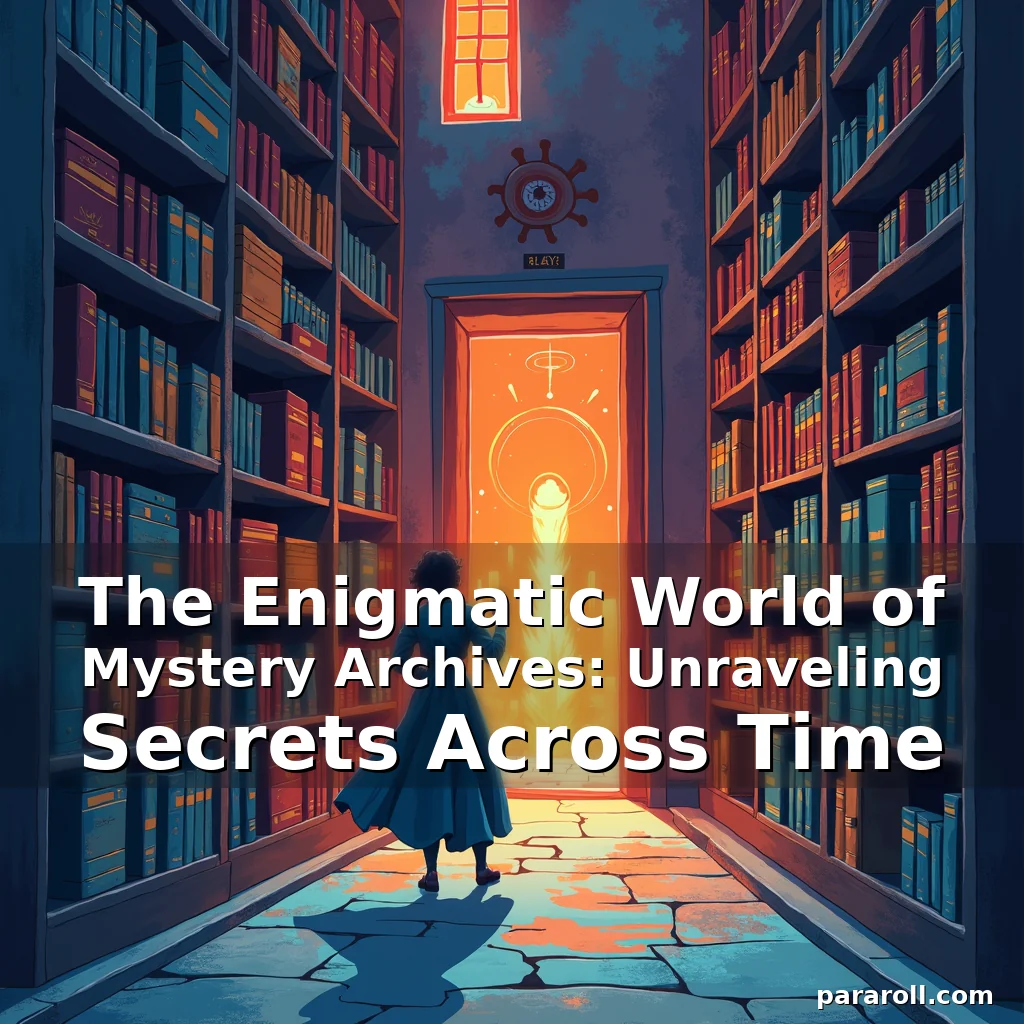
The Enigmatic World of Mystery Archives: Unraveling Secrets Across Time
In an age where information is at our fingertips, the allure of mystery archives endures as a captivating enigma that continues to draw historians, enthusiasts, and curious minds alike. These collections—often shrouded in secrecy and myth—are not merely repositories of old documents but gateways to lost stories, forgotten knowledge, and hidden truths waiting to be uncovered.
Mystery archives span from ancient libraries like Alexandria to modern-day digital vaults filled with classified data. They serve as both historical artifacts and potential treasure troves of unsolved puzzles, inviting exploration across time and space.
The Origins of Mystery Archives: A Historical Tapestry
The concept of archiving dates back thousands of years, originating in civilizations such as Mesopotamia, Egypt, China, and Greece. Ancient scribes meticulously recorded events, religious texts, legal codes, and astronomical observations using materials ranging from clay tablets to papyrus scrolls.
These early archives were often housed within temples or royal courts, serving dual purposes as centers of learning and places of worship. The preservation of records was crucial for maintaining societal order and continuity, especially in hierarchical societies governed by divine authority.
- Clay Tablets: Used extensively in Sumerian civilization for recording trade transactions, laws, and administrative matters. Their durability ensured survival through millennia despite environmental degradation.
- Papyrus Scrolls: Preferred in Egyptian culture due to their lightweight nature, facilitating easier transportation and storage compared to heavier stone inscriptions.
As empires rose and fell, so did these archives face destruction or neglect. For instance, the burning of the Library of Alexandria remains one of history’s most poignant losses—an estimated million scrolls vanished forever during various periods of turmoil.
Despite such setbacks, remnants of these ancient systems persist today, influencing how we organize and protect information globally. Modern archival science owes much to these foundational practices established centuries ago.
Unearthing Lost Knowledge: The Role of Archaeology
Arcane discoveries buried beneath layers of earth have continually reshaped human understanding. From cuneiform inscriptions found near Nineveh to Viking runestones unearthed along Scandinavian coasts, archaeologists play pivotal roles in reviving what once seemed irretrievable.
Technological advancements have significantly enhanced archaeological efforts; ground-penetrating radar allows researchers to detect subterranean structures without invasive excavation while DNA analysis helps trace origins and migrations with unprecedented accuracy.
One remarkable example includes the Dead Sea Scrolls discovered in caves near Qumran around 1947. Containing some of Judaism’s oldest biblical manuscripts alongside sectarian writings, they offered invaluable insight into Second Temple period beliefs and practices.
The study of these relics isn’t confined solely to academia—it impacts popular culture too, inspiring novels, films, and even video games centered around deciphering cryptic messages left behind by long-lost civilizations.
Digital Age Mysteries: Cyber Archives & Information Security
With increasing digitization comes new dimensions of mystery surrounding cyberspace itself. Digital archives now hold vast quantities of sensitive personal data, government secrets, corporate strategies—all vulnerable yet essential components of contemporary life.
Cybersecurity experts work tirelessly against hackers seeking unauthorized access or manipulation. Data breaches remain prevalent threats worldwide; according to reports from cybersecurity firms like McAfee, approximately 68% of businesses experienced cyberattacks last year alone.
Encryption technologies offer protection mechanisms but also create riddles for those attempting penetration testing exercises designed purely for defensive purposes rather than malicious intent.
This duality presents intriguing challenges—how do we safeguard critical infrastructure against sophisticated attacks without stifling innovation? Finding balance here defines future trends in secure computing environments.
Conspiracy Theories & Paranoia Surrounding Hidden Records
Folklore has always been rich with tales about secret societies guarding forbidden wisdom. Whether it involves Freemasons allegedly controlling global affairs or Illuminati conspiracies manipulating world events, belief systems thrive on speculation regarding concealed knowledge.
Modern conspiracy theories frequently reference obscure documents purportedly revealing governmental misconduct or extraterrestrial contact. Websites dedicated exclusively to compiling such evidence attract millions annually, indicating widespread interest in unverified claims.
While many dismiss these narratives as mere fabrications fueled by distrust toward institutions, others argue that official silence sometimes validates suspicions. This tension underscores broader societal issues related to transparency versus national security concerns.
Examining why people gravitate towards these ideas reveals deeper psychological needs—for control over uncertainty, validation of alternative viewpoints, or simply entertainment derived from solving hypothetical mysteries.
Preserving Fragile Histories: Challenges Faced by Archivists Today
Conservation techniques evolve continuously to combat deterioration caused by natural elements and human negligence alike. Paper decay, mold infestation, ink fading—each poses distinct problems requiring specialized solutions tailored specifically to particular mediums used historically.
Climate change exacerbates existing vulnerabilities; rising temperatures accelerate chemical reactions leading faster decomposition rates among organic materials stored improperly. Institutions invest heavily into climate-controlled facilities aiming mitigating damage risks effectively.
Digitization offers promising alternatives allowing wider accessibility while reducing physical handling demands placed upon original items. However, scanning processes can introduce distortions affecting legibility unless executed carefully under expert supervision.
Beyond technical hurdles lie ethical dilemmas concerning ownership rights—who decides which materials get preserved permanently versus discarded? Such questions challenge traditional notions about cultural heritage management priorities.
Evolving Technologies in Archive Management Systems
Innovation drives progress within archival fields, particularly evident through AI integration enabling advanced cataloging capabilities previously unimaginable. Machine learning algorithms identify patterns across massive datasets identifying connections otherwise invisible manually.
Robotics facilitates automated retrieval operations minimizing manual labor involved traditionally associated with library functions. This efficiency improvement enhances user experience substantially without compromising accuracy levels required professionally.
Blockchain technology introduces novel approaches ensuring immutable record keeping resistant tampering attempts. Its decentralized structure provides robustness against single points failure scenarios common centralized databases.
Such developments signify transformative shifts redefining operational paradigms adopted formerly rigid bureaucratic frameworks now replaced agile methodologies prioritizing adaptability responsiveness technological advances rapidly emerging sectors.
Interactive Experiences: Engaging With Mystery Through Technology
Virtual reality experiences immerse users inside reconstructed historical sites offering first-hand encounters with past cultures indirectly via simulated environments generated computationally accurate recreations based thorough research conducted beforehand.
Augmented reality applications overlay additional context onto real-world locations transforming ordinary spaces into interactive museums capable delivering educational value dynamically adjusting presentations according audience preferences detected automatically through device sensors.
Online platforms host collaborative projects inviting global participation wherein individuals contribute translations transcribe contents enhance metadata enrich collective understanding shared resources accessible universally internet-connected devices anywhere anytime.
By leveraging immersive technologies coupled open-source initiatives fostering communal engagement, archivists successfully bridge gap between academic rigor public curiosity promoting inclusive approach knowledge dissemination reaching diverse demographics effectively.
Future Prospects: What Lies Ahead for Mystery Archives?
Anticipated breakthroughs likely involve further refinement artificial intelligence models capable interpreting non-standard scripts improving interpretation accuracy beyond current thresholds achieved thus far limited primarily standardized languages widely recognized internationally.
Quantum computing promises revolutionize encryption methods currently employed protecting sensitive material restricting unauthorized access simultaneously enhancing decryption capacities benefiting legitimate scholars researching encrypted documents safely securely.
Sustainable energy solutions may address power consumption issues plaguing remote archive locations dependent unreliable electrical grids necessitating innovative battery storages renewable sources generating consistent supply uninterrupted operation vital preserving delicate artifacts susceptible damage fluctuating conditions.
Ultimately, continued investment interdisciplinary cooperation remains fundamental guaranteeing resilience facing inevitable challenges ahead shaping trajectory development field ensuring legacy enduring future generations inherit benefit thereof comprehensively.
Conclusion
The journey through mystery archives reveals a complex interplay between tradition and innovation, where each discovery adds another layer to humanity’s ever-expanding narrative. As we continue exploring these enigmatic collections, we’re reminded that every document, artifact, or piece of data holds significance worthy respect preservation.
For anyone intrigued by uncovering secrets long buried away whether physically or digitally embracing opportunities available today will undoubtedly lead fascinating adventures filled wonderment enlightenment awaiting those brave enough venture forth seek truth hidden depths unknown realms.